Mettre en évidence:
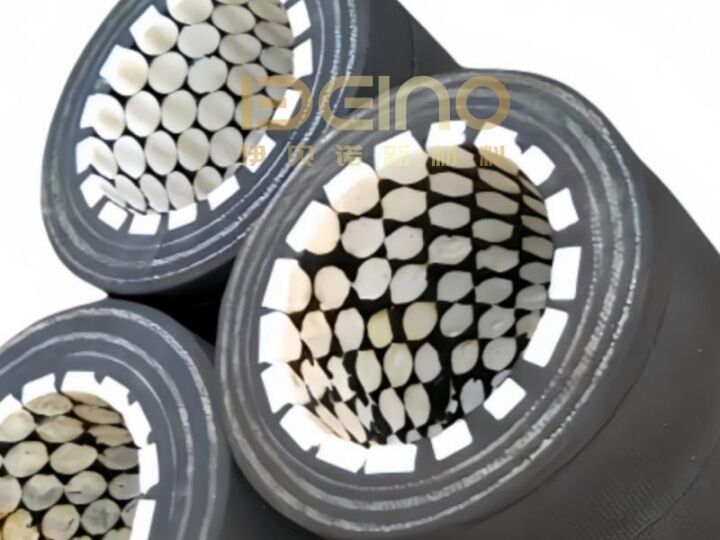
Excellente canalisation flexible en céramique de résistance à l'abrasion
, Tuyau en caoutchouc doublé de céramique à diamètre intérieur personnalisable
, Tuyau en céramique à durée de vie 5 fois plus longue
Tuyau Flexible en Céramique pour le Dragage et le Transport de Sable
Introduction du produit
Les opérations de dragage et de transport de sable dans les ports, les rivières et les environnements d'ingénierie côtière impliquent des mélanges très abrasifs de sable, de limon, de gravier et d'eau. Ces matériaux créent un flux érosif continu, en particulier dans des conditions de haute vitesse d'écoulement et de pression.
Les tuyaux en caoutchouc traditionnels échouent souvent prématurément en raison de l'usure interne, tandis que les pipelines en acier manquent de flexibilité et sont sujets à la fissuration sous des conditions de charge dynamique telles que le mouvement des vagues, les vibrations des équipements et le déplacement des pipelines.
Le défi n'est pas seulement la résistance à l'abrasion, mais aussi le maintien de l'intégrité structurelle et de la flexibilité dans des conditions de travail en constante évolution.

Conception d'ingénierie structurelle
Ce pipeline flexible en céramique est conçu avec une structure composite multicouche optimisée pour le transport de boues :
Couche intérieure – Céramique d'alumine (≥95%) :Offre une dureté ultra-élevée et une résistance à l'érosion par les particules de sable.
Couche de liaison intermédiaire :Assure une forte adhérence entre la céramique et le caoutchouc, empêchant la délamination sous un flux à haute pression.
Couche extérieure – Caoutchouc nitrile renforcé (NBR) :Offre flexibilité, résistance à la traction et résistance aux contraintes environnementales telles que l'exposition à l'eau de mer.
Cette conception permet au pipeline de maintenir ses performances même sous des contraintes de flexion, de vibration et de fluctuations de pression.
Comportement de l'écoulement et mécanisme d'usure
Dans les systèmes de dragage, l'usure est principalement causée par :
♣Impact de particules à haute vitesse sur les parois du pipeline
♣Turbulence aux coudes et aux points de connexion
♣Sédimentation et ré-accélération des particules
La surface intérieure lisse en céramique réduit l'intensité de la turbulence et minimise la friction particule-paroi, réduisant considérablement les taux d'usure par rapport aux tuyaux en caoutchouc conventionnels.
De plus, la dureté de la céramique d'alumine (≥85 HRA) empêche la micro-coupure et la dégradation de surface causées par les particules de sable tranchantes.
Scénarios d'application dans les projets de dragage
♣Ce tuyau en céramique résistant à l'abrasion est largement utilisé dans :
♣Pipelines de dragage portuaire
♣Projets de désenvasement de rivières et de canaux
♣Systèmes de transport de boues de sable
♣Projets de remblaiement offshore
♣Pipelines de refoulement de pompe
Avantages d'ingénierie
♣Durée de vie prolongée dans les conditions de boues de sable
♣Réduction des temps d'arrêt dans les opérations de dragage
♣Installation flexible pour les pipelines flottants ou terrestres
♣Haute résistance à l'eau de mer et aux contraintes environnementales
♣Coût de cycle de vie inférieur par rapport aux pipelines en acier ou en caoutchouc
FAQ
Q1 : Quelle est la durée de vie dans les conditions de dragage ?
R : La durée de vie dépend de la concentration de la boue, de la taille des particules et de la vitesse d'écoulement. Dans des mélanges typiques sable-eau, le pipeline flexible en céramique peut durer 3 à 5 fois plus longtemps que les tuyaux en caoutchouc standard, en particulier dans les sections à forte usure comme les sorties de pompe et les coudes.
Q2 : Le tuyau peut-il supporter des boues à forte concentration de sable ?
R : Oui. La doublure en céramique d'alumine de haute dureté (≥85 HRA) est spécialement conçue pour résister à l'érosion par particules lourdes, ce qui la rend adaptée aux systèmes de transport de boues de sable à haute concentration.
Q3 : Convient-il aux environnements offshore ou marins ?
R : Oui. La couche extérieure en caoutchouc NBR offre une bonne résistance à l'eau de mer, à l'humidité et aux contraintes environnementales, ce qui la rend adaptée aux projets de dragage côtiers et offshore.
Q4 : Peut-il remplacer les pipelines en acier dans les systèmes de dragage ?
R : Dans les sections à forte usure et flexibles, oui. Les tuyaux en céramique sont idéaux pour remplacer les pipelines en acier dans les zones où l'abrasion et les vibrations sont des facteurs critiques, tandis que les tuyaux en acier peuvent toujours être utilisés pour les sections droites longues afin d'optimiser les coûts.
Q5 : Quels sont les points de défaillance typiques des tuyaux conventionnels ?
R : Les tuyaux en caoutchouc traditionnels échouent généralement en raison de l'usure de la paroi intérieure, de la délamination ou de la fissuration sous les fluctuations de pression. La structure doublée de céramique réduit considérablement ces risques.
Q6 : L'installation est-elle compliquée par rapport aux tuyaux en acier ?
Non. Le pipeline flexible en céramique est plus facile à installer en raison de sa flexibilité. Il peut s'adapter aux terrains irréguliers et aux environnements dynamiques sans nécessiter d'alignement complexe.
Q7 : Comment sélectionner la bonne taille de tuyau ?
La sélection doit tenir compte du débit, de la concentration de la boue, de la taille des particules et de la pression du système. Notre équipe d'ingénierie peut fournir des recommandations de dimensionnement personnalisées basées sur les données du projet.
Q8 : La doublure en céramique se fissure-t-elle sous flexion ?Non. Le tuyau est conçu avec une structure céramique segmentée et un support en caoutchouc élastique, ce qui lui permet de maintenir son intégrité dans des conditions de flexion contrôlées.

 Votre message doit contenir entre 20 et 3 000 caractères!